“A single show may involve tens of thousands of drones. Every trajectory, speed, and the precise timing with each fireworks burst must be calculated and simulated repeatedly.”
By Zhang Nan & Ding Chunyu, journalists from Outlook Weekly
On a weekend night, the “Sky Theater” in Liuyang, Hunan Province, once again became the center of attention.
Ms. Wang, who was lucky enough to grab a symbolic “1-yuan ticket,” arrived early, eager to watch the final fireworks show of 2025 in Liuyang.
As thousands of drones synchronized with traditional fireworks, vibrant patterns unfolded across the sky. The venue was packed; outside, crowds gathered, gazing upward. On social media, keywords such as “Liuyang fireworks” surged in popularity as short videos captured the spectacle.
This was no ordinary festive performance. Since 2023, Liuyang has carefully cultivated a recurring weekend event branded as “Meet by the Liuyang River, Watch Fireworks on Weekends.” Through systematic integration of fireworks, drones, and cultural tourism, the city has transformed a short-lived show into a sustainable cultural tourism ecosystem — reshaping night-time consumption and revitalizing surrounding industries.
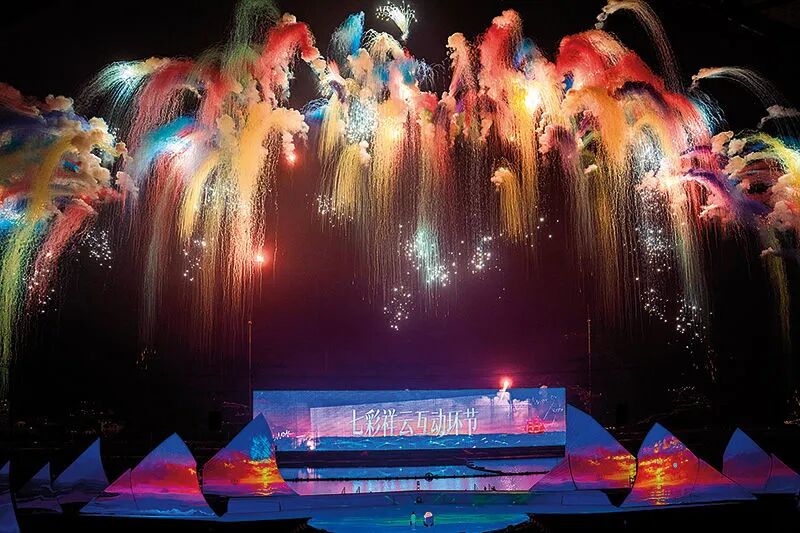
Content Reinvented: Technology Reshapes the Core Attraction
On October 17, 2025, during the 17th Liuyang Fireworks Cultural Festival, a drone-fireworks collaboration directed by Huang Cheng and his creative team set two Guinness World Records:
Nearly 16,000 drones controlled by a single computer simultaneously
A drone formation carrying over 7,400 fireworks devices
Behind such a globally recognized performance lies a fundamental shift: from artisan-driven craftsmanship to algorithm-driven engineering systems.
At Hunan Chizi Culture & Technology Co., the technical team focuses on millisecond-level synchronization between drone formations and fireworks ignition.
“A show may require tens of thousands of drones. Each drone’s route, speed, and coordination with explosion timing must undergo precise calculation and repeated simulation,” explains Li Shijie, a post-95 entrepreneur and company founder.
Born into a fireworks family, Li Shijie grew up immersed in the industry. While studying overseas, he encountered drone light shows, which inspired him to merge technology with tradition. After returning to China in 2023, he began independently developing drone systems and flight-control algorithms.
With continuous optimization in complex real-world environments — including performances at Sky Theater and scenic destinations nationwide — creative boundaries have expanded. Fireworks are no longer merely atmospheric tools; they have become narrative media capable of conveying structured stories and emotional expression.
Initially, drones served mainly as visual supplements or carriers of cold fireworks. Today, innovators like Chizi Tech have pioneered a more narrative-driven “digital performance” model: drone formations act as independent storytelling units, constructing storylines in the sky, while traditional fireworks erupt at precisely timed emotional peaks.
Technology integration has evolved from visual overlay to narrative collaboration.
Liuyang is no longer selling fireworks alone — it is selling structured storytelling products. Fireworks art is moving from visual spectacle to immersive narrative experience, shifting performance economics from holiday-driven traffic spikes to sustained content innovation.
The Sky Theater has become both a stage and a laboratory. Different fireworks companies take turns hosting weekly shows, receiving government support while showcasing new creative technologies.
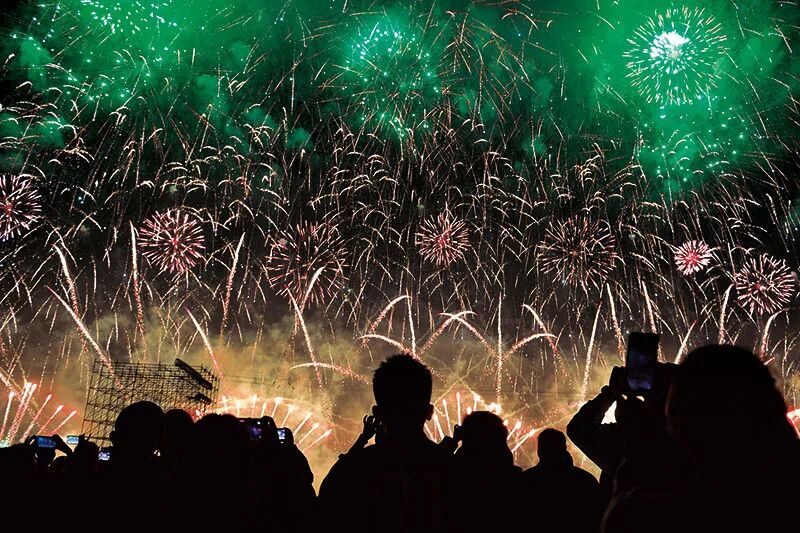
Scenario-Based Operations: From One-Off Events to Weekend Destination
With strong technical content as its foundation, Liuyang’s next challenge was transforming performances into sustainable consumer products.
The strategy: build Sky Theater and its surrounding one-square-kilometer area into a micro-vacation destination.
The local government authorized Liuyang Urban & Rural Development Group (Liufa Group) to operate the area through a market-oriented approach.
According to General Manager Xiong Wei, the group established a dedicated cultural tourism investment company to coordinate the district’s development. Key initiatives include:
A paid “Sky Camp” accommodating 3,000–5,000 visitors, offering local cuisine, tea drinks, live band performances, and large outdoor screens
Free shuttle services
Large-capacity free viewing areas along Jincheng Avenue, accommodating tens of thousands
Revenue models include:
1-yuan promotional tickets targeting out-of-town visitors
Premium camping packages
“Direct bus + fireworks” and “hotel + fireworks” tourism bundles
This model transformed the local tourism ecosystem. One performance became a consumption fulcrum, leveraging integrated spending across dining, accommodation, shopping, and entertainment.
Data show that since regular weekend fireworks began:
Visitor numbers have exceeded 7 million
Consumption has surpassed 20 billion yuan
Hotel and homestay businesses have grown from 274 to 639 establishments
Restaurants report 6–10x higher revenue during fireworks weekends
Industrial Linkage: Fireworks as an Urban Growth Engine
As weekend fireworks became a stable “traffic gateway,” ripple effects spread across industries.
Catering upgraded rapidly, with Liuyang steamed cuisine gaining brand recognition and standardization. Hospitality saw structural upgrades, attracting international hotel brands such as Wyndham and InterContinental.
Cultural products and specialty retail flourished. Visitors now extend “watching a show” into a comprehensive consumption pattern: dining, overnight stays, and souvenir purchases — significantly increasing per capita spending.
The city also introduced educational packages combining “Red culture study tours + fireworks shows,” boosting local red tourism.
More profoundly, Liuyang’s entrepreneurial ecosystem has been activated.
Within a provincial-level incubation base along the Liuyang River, startups have emerged around the “fireworks +” concept. Businesses focus on:
Digital content production
New media marketing
Cultural merchandise development
Themed homestays
Experiential catering
Many do not produce fireworks directly but create new consumption scenarios around the fireworks experience.
“Upstairs and downstairs are upstream and downstream,” describes Li Lisha, deputy director of the cultural industry development center.
A single fireworks show now generates a complete service chain — from creative planning and technical execution to online promotion and offline experience — attracting young entrepreneurs back home.
Liuyang’s identity is evolving from a traditional “Fireworks Hometown” to a dynamic creative cultural tourism destination and youth-friendly entrepreneurial city.
The first out-of-province replication of the Sky Theater model — Chongqing Sky Theater — launched in Changshou District in 2025, marking Liuyang’s brand expansion nationwide.